Buatong Field at Doi Mae U-Kor Through Mae Hong Son Loop Travel
A scenic route guide for travelers comparing loop journeys with land-based touring from Chiang Mai
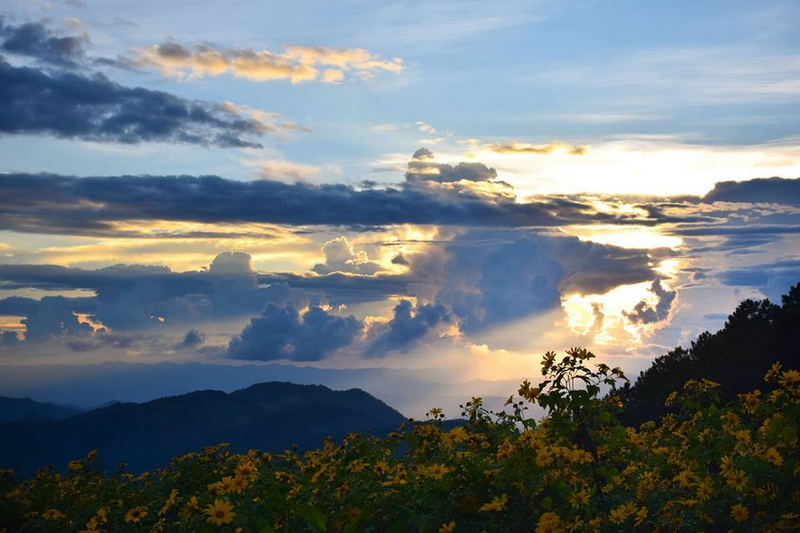
Buatong Field at Doi Mae U-Kor is best understood as part of a broader mountain journey rather than as an isolated photo stop. In Khun Yuam District, Mae Hong Son, the highland landscape opens into wide slopes covered with yellow Mexican sunflowers, locally associated with the name Thung Bua Tong. During the flowering season, the color of the hills contrasts with forested ridges, winding roads, and the cooler atmosphere of the northern uplands. The view is spacious and seasonal, rewarding visitors who are interested in landscapes as much as individual attractions. For travelers beginning in Chiang Mai, the field fits naturally into the idea of a Mae Hong Son loop: a route shaped by mountain scenery, changing elevations, rural communities, and several possible stops along the way. It also offers a useful case study in how Land Tours in Chiang Mai can extend beyond city sightseeing into regional travel. The practical question is not simply how to reach one viewpoint, but which style of overland journey gives enough time for scenery, pauses, and respectful observation. This guide considers that route-planning perspective while connecting Buatong Field with Doi Inthanon National Park and Hmong Microwave Village.
What makes the Buatong field distinctive
The defining feature of Buatong Field at Doi Mae U-Kor is its seasonal blanket of yellow blooms. The flowers spread across open mountain slopes, creating a landscape that feels very different from the dense green forest found on many northern Thai roads. The scene is especially striking when viewed from elevated points, where the fields form broad patches against darker hills and distant valleys. Rather than being a manicured garden, the attraction is a natural-looking highland setting shaped by terrain, weather, and the flowering cycle. Travelers researching Thung Bua Tong Doi Mae U Kho can use these details when planning the trip.
The name appears in several forms, including Doi Mae U Kor, Doi Mae U-Kor, and Thung Bua Tong Fields at Doi Mae U Kho. These variations refer travelers to the same general mountain destination, so recognizing the different spellings can be helpful when comparing maps or discussing routes. The setting itself is more important than the spelling: visitors come for open views, rolling ridgelines, crisp mountain light, and the visual relationship between cultivated areas and forested country.
Timing matters because the field’s strongest visual identity is seasonal. Outside the flowering period, the slopes remain part of an attractive mountain environment, but the familiar yellow panorama may not be present. Weather can also affect visibility, color, and the experience of standing above the surrounding valleys. A flexible attitude is therefore useful. The field should be approached as a living landscape, not as a guaranteed backdrop that looks identical throughout the year.
Reading the Mae Hong Son loop from Chiang Mai
A Mae Hong Son Loop Tour From Chiang Mai is a route concept rather than one fixed product. The journey links Chiang Mai with the mountains of Mae Hong Son Province through roads that pass forests, viewpoints, rural settlements, and highland districts. Travelers may encounter different route directions and lengths, depending on whether their priority is the province’s main town, Pai, Khun Yuam, cultural stops, or natural scenery. Buatong Field belongs to the western and southwestern mountain story of the region, where the road experience is as important as the destination.
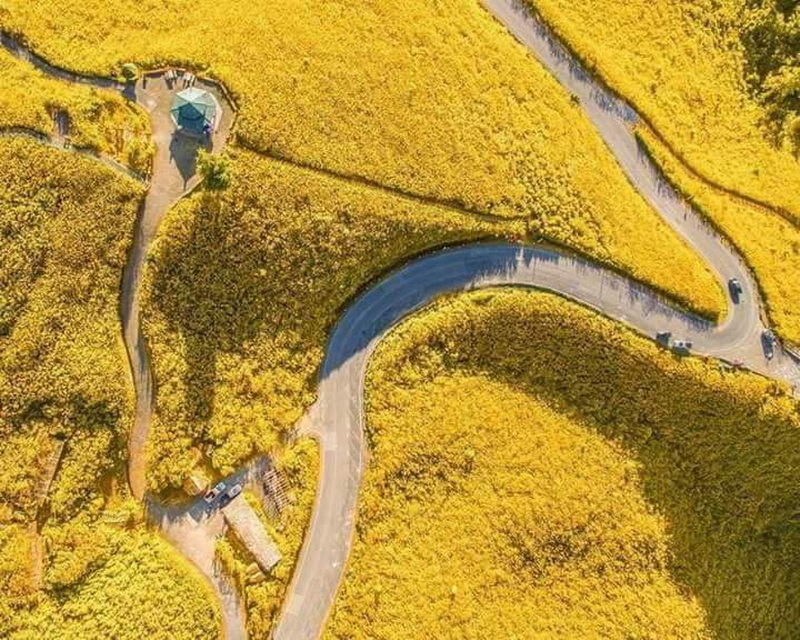
The loop format suits travelers who enjoy gradual transitions. Urban streets give way to foothills, then to more winding mountain roads and elevated landscapes. The changing scenery creates a sense of progression that is difficult to reproduce on a fast transfer between two points. It also means that route planning should account for the character of the roads, the distance between districts, and the value of taking breaks. A scenic journey can become tiring if every stop is treated as a rushed checkpoint.
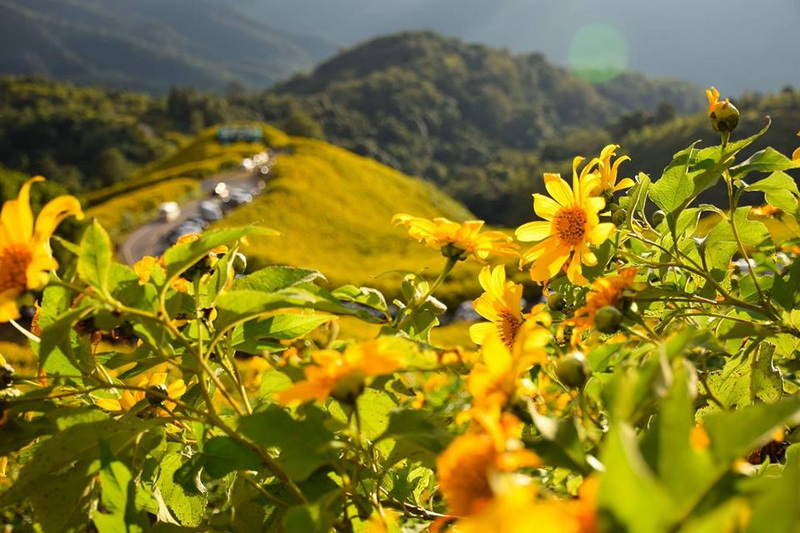
For an independent traveler, the loop can be organized around a few major landscape priorities, with Buatong Field serving as one anchor in the Khun Yuam area. For travelers using a private vehicle or arranged transport, the benefit is the ability to consider weather, daylight, road conditions, and personal energy when shaping the journey. Group travel may place more emphasis on shared timing and agreed stops. None of these approaches is automatically best; the right choice depends on how much flexibility and quiet observation the traveler wants.
The roads also deserve attention as part of the experience. Mountain routes reveal layers of forest, farmland, ridges, and valleys, but they can be physically demanding for some passengers. Travelers who are sensitive to winding roads may prefer regular pauses and a slower pace. Looking out across the landscape, rather than focusing only on arrival time, helps explain why an overland loop is attractive in the first place.
How land tours in Chiang Mai can support the journey
Land Tours in Chiang Mai cover a broad range of travel styles, from short countryside outings to multi-day journeys across northern provinces. In the context of Buatong Field, the phrase points toward road-based travel that connects landscapes rather than relying on a single urban base. A local tour planner or travel agency may help travelers think through vehicle arrangements, route duration, seasonal interests, and the balance between major sights and smaller roadside observations. Those services should be evaluated by clarity and suitability rather than by unverified promises.
A land-based journey can be designed for different travel personalities. Nature lovers may want time for viewpoints, forest edges, and the changing colors of the hills. Photographers may prefer a route that leaves room for weather and light. Families or mixed-age groups may value a manageable rhythm with fewer demanding stops. Culture-focused travelers can look for opportunities to observe communities respectfully, without treating local life as a staged performance. The common thread is that the road itself becomes part of the destination.
When comparing a Chiang Mai-based arrangement, useful questions concern the route logic rather than only the number of attractions. Does the plan allow enough time for the mountain setting? Is the transport style appropriate for a winding overland journey? Are the stops connected by geography, or does the day depend on excessive backtracking? Is the itinerary described clearly without assuming that every seasonal feature will be available? These questions help distinguish a thoughtful travel plan from a list of attractive names.
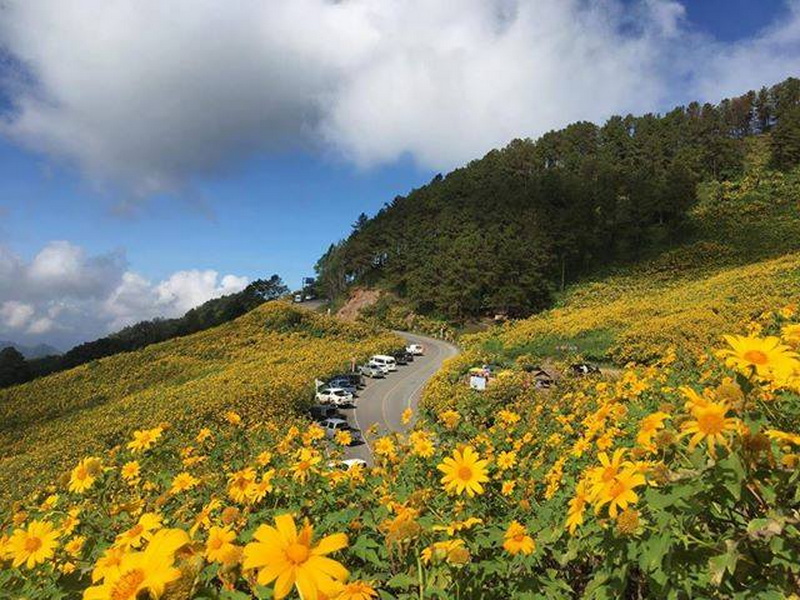
The phrase Mae Hong Son Loop Tour From Chiang Mai may appear in different kinds of travel searches, but travelers should still check what the wording actually means. Some plans may emphasize a complete circuit, while others may focus on selected districts or a particular return route. Since operational details can change, confirmation of current transport arrangements, opening conditions, and road information is important before departure. The scenic value of the region does not remove the need for practical preparation.
Traveling through the highlands with care
Buatong Field is part of a lived regional landscape, not simply a decorative viewpoint. Visitors can help protect its character by staying on appropriate paths, avoiding damage to plants, carrying waste away, and keeping noise at a considerate level. These simple actions matter during busy flowering periods, when many people may gather in a relatively open environment. A photograph is more meaningful when it does not require trampling the flowers or disrupting another visitor’s experience.
The surrounding districts include communities with their own histories, livelihoods, and cultural identities. Names such as Hmong Microwave Village should be approached with respect and attention to context. Travelers should not assume that a village exists primarily for tourism or that every resident wishes to be photographed. Asking permission where appropriate, following local guidance, and choosing neutral language are better ways to engage with community spaces.
Seasonal travel also calls for humility. Clear skies, strong blooms, and distant views cannot be guaranteed by a route name alone. Cloud, rain, haze, and changing conditions may become part of the experience. The mountain landscape remains valuable even when it differs from promotional images, and accepting that variability encourages a more responsible relationship with northern Thailand’s natural places.
Nearby Attractions
Doi Inthanon National Park
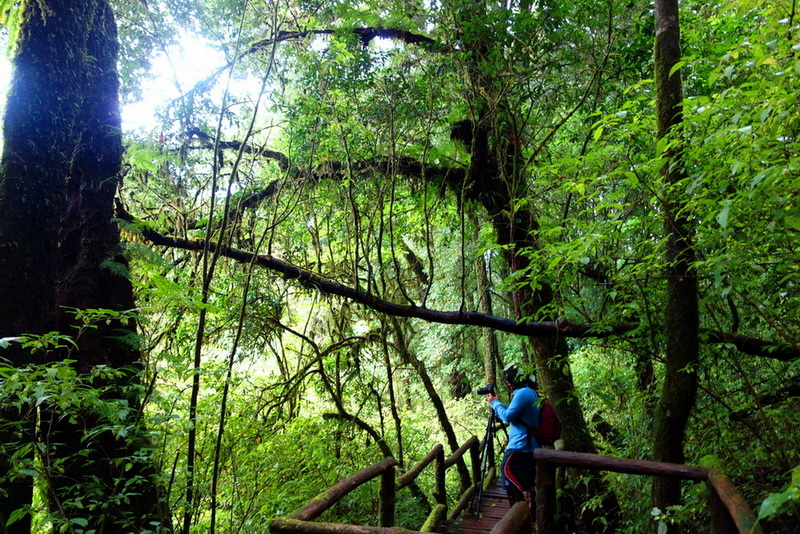
Doi Inthanon National Park provides a contrasting highland experience that can be considered alongside a wider Chiang Mai and Mae Hong Son travel plan. Its identity is associated with elevated forest, mountain climate, waterfalls, viewpoints, and important watershed landscapes. Compared with the open yellow slopes of Buatong Field Doi Mae U-Kor, Doi Inthanon is often experienced through a stronger forest setting and a more varied range of natural environments.
The two destinations should not be treated as interchangeable stops. Their appeal comes from different landscape qualities: Buatong Field emphasizes seasonal color and broad ridgeline views, while Doi Inthanon highlights protected mountain ecosystems and cool-elevation scenery. Travelers combining them should think in regional terms and confirm current road conditions and practical timing, since the places lie in different parts of northern Thailand and a sensible plan depends on the overall route.
Hmong Microwave Village
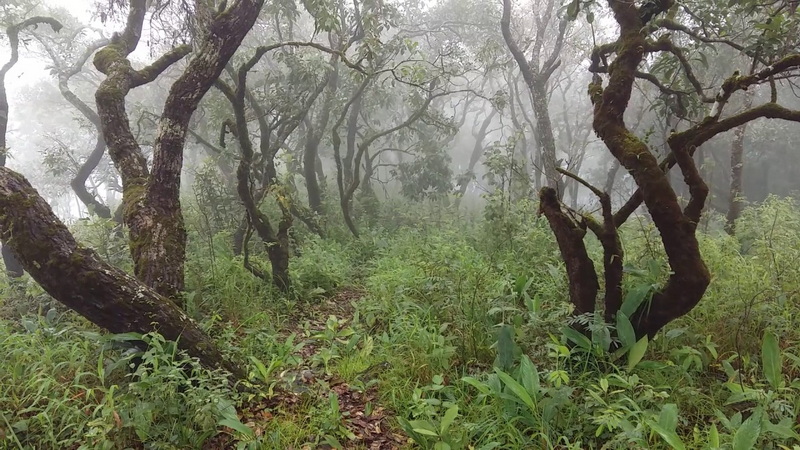
Hmong Microwave Village can add a community and landscape dimension to a journey focused on the highlands. Its inclusion encourages travelers to look beyond viewpoints and consider how mountain communities are connected to roads, agriculture, services, and surrounding terrain. The visit should be approached as an opportunity for respectful observation, not as a promise of a staged cultural display.
Travelers should follow local expectations, avoid intrusive photography, and remember that ordinary homes and daily activities are not automatically tourist attractions. When a route includes community areas, clear communication and considerate behavior are more important than trying to collect quick impressions. In combination with Buatong Field, the village can help broaden the journey from scenic viewing to a more grounded understanding of the region.
Where the Experience Leads Next
Buatong Field at Doi Mae U-Kor rewards a route that leaves space for weather, mountain roads, seasonal change, and quiet observation. A loop journey from Chiang Mai offers continuity across northern landscapes, while land-based touring can provide practical support for travelers who want to connect several places without reducing the region to a checklist. Whether the focus is yellow blooms, forested ridges, or respectful community encounters, the strongest plan is one that matches the traveler’s pace and treats the highlands as a living environment.


No comments:
Post a Comment